🚨 Deadline: 4 February 2026

Stop the
Battery CageStandard

ARSO's draft standard CD-ARS 1241 falsely claims battery cages "guarantee the welfare of birds." This is not science — it's a threat to African hens, farmers, and markets.

Public comments due: 4 February 2026
Loading countdown…
⏱ 10-second action: Email ARSO Find Your NSB ✅ Report Your Action
Scroll to learn more ↓

37 African NGOs Take a Stand Against Cruel Battery Cages

Initiated by Animal Law Reform South Africa & Compassion in World Farming

Read the Joint Letter sent to ARSO and the National Standards Bodies of 44 ARSO member countries concerning the draft Battery Cage Standards. You can also send it yourself below.

📄 Read the Joint Letter (PDF)

Signatories include: Animal Law Reform South Africa • Compassion in World Farming • Animal Welfare League • Nurture Imvelo Trust Zimbabwe • Uganda Vegan Society • ANAW Kenya • and 31 more organisations

A Standard Built on False Claims

🚩 Red Flag

"The laying hen cage system has become the most important facility as it guarantees the welfare of birds while laying."

— CD-ARS 1241:2025(E), Introduction

This claim directly contradicts decades of scientific research. Battery cages prevent hens from expressing their most basic natural behaviours: nesting, perching, dust-bathing, and foraging. Confining a hen to 450 cm² — smaller than an A4 sheet of paper — does not "guarantee welfare." It guarantees suffering.

450 cm² cage vs cage‑free: the real difference

The draft battery cage standard allows roughly 450 cm² per laying hen.
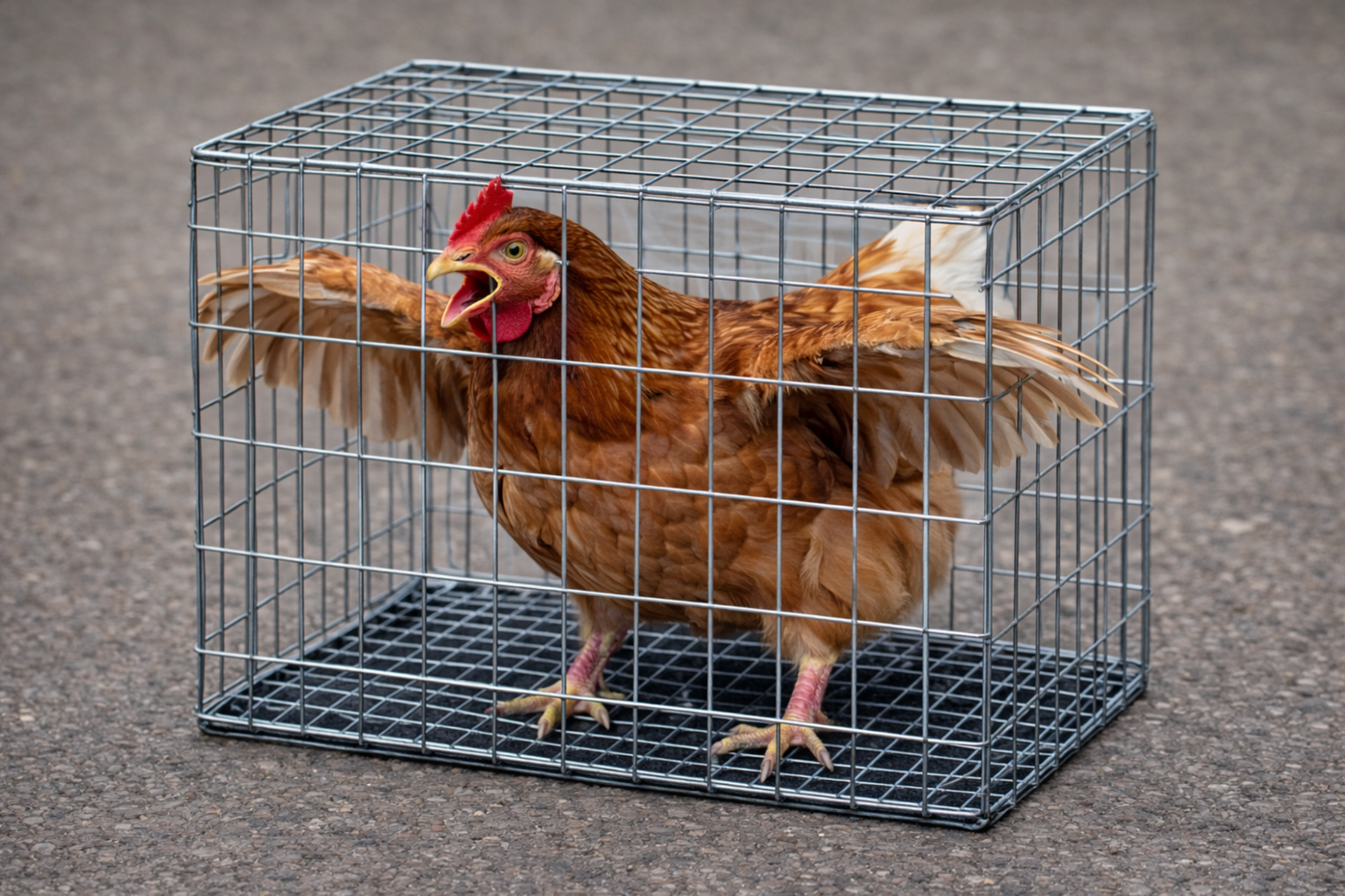
A hen confined in a small wire cage (representing very limited space).
Battery cage (≈450 cm² per hen) — extremely restricted movement.

450 cm² is roughly the area of:

  • A human hand spread flat
  • Slightly larger than a postcard
  • About three-quarters of an A4 sheet of paper

For a laying hen, this means:

She cannot fully stretch her wings. She cannot turn around freely. She cannot walk or take even a single step. Natural behaviors like dust-bathing, scratching, perching, or nesting are impossible. Much of her time is spent standing still or pressed against other hens.
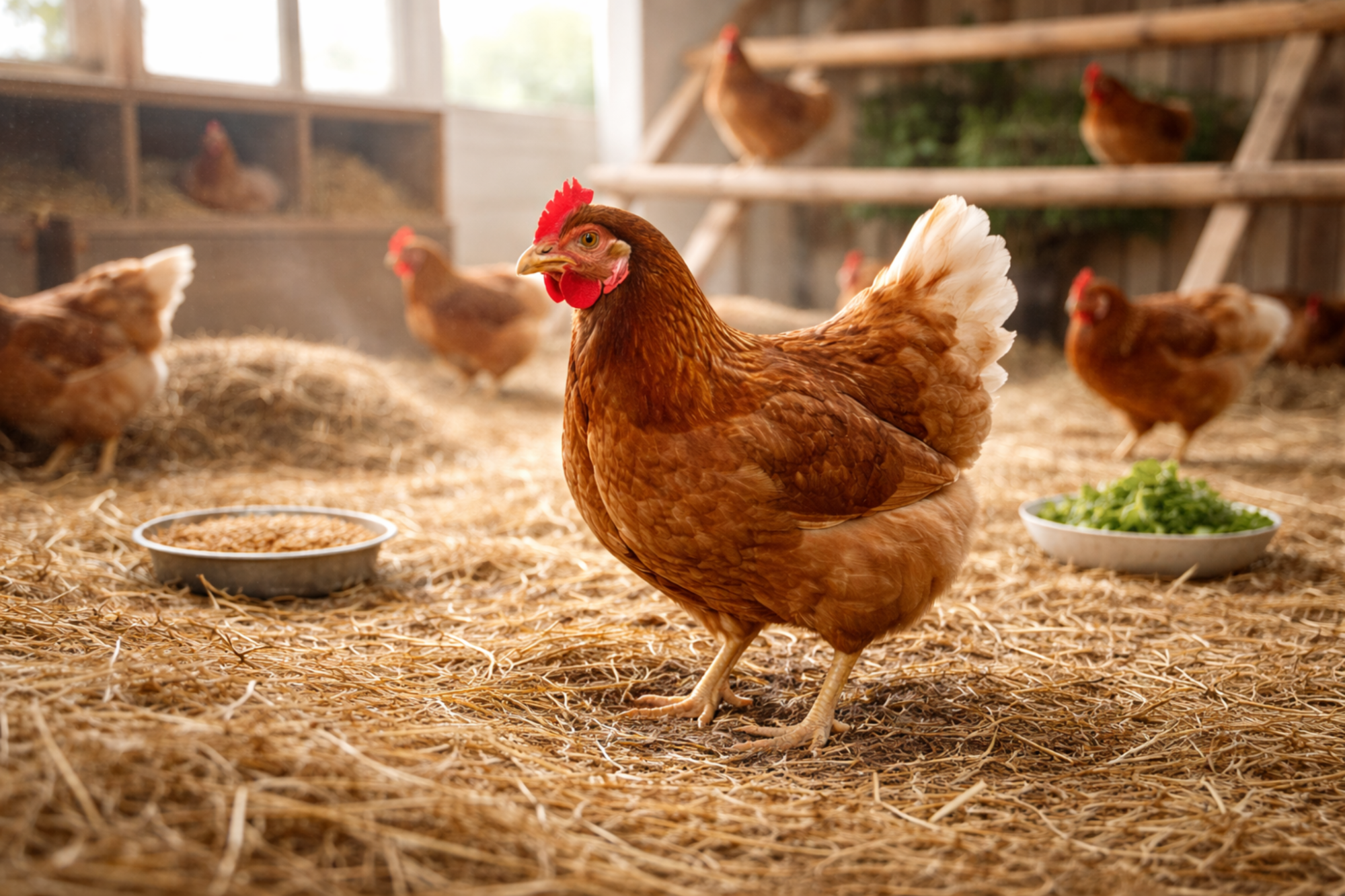
Hens in a cage-free barn with litter and room to move.
Basic cage-free system — litter, space to move, and key resources.

Basic Cage-free System

Cage-free usually includes:

  • Nests
  • Perches
  • Litter for scratching
  • Space to move freely
450

Square Centimetres

The space allocation per hen — less than a single sheet of paper.

39%

Africa is Cage-Free

Nearly 40% of African egg production is already cage-free.

88%

Commitments Fulfilled

Of African cage-free corporate commitments with 2024 deadlines met.

44

Countries Affected

ARSO standards apply across 44 African member states.

ARSO Contradicts Itself

The same Technical Committee (TC 23) released two standards simultaneously — and they directly contradict each other.

CD-ARS 1241 — Battery Cages

"The laying hen cage system... guarantees the welfare of birds."

No perches. No nests. No litter.

VS

CD-ARS 1851 — Cage-Free

"Consumers increasingly care about animal welfare... the need to consider adopting cage-free systems."

Recognizes perches, nests, litter as essential.

ARSO cannot credibly endorse both standards.

What We're Demanding

Farmers Leading the Change

"Battery cages never belonged in Zimbabwe and still do not belong. They are part of a cruel farming system that needs to become just a part of history."
SN
Sanele NdlovuFounder, Nurture Imvelo Trust, Zimbabwe
"Rural farmers need a resilient chicken that can fend for itself, stay alive, and yield enough meat and eggs to feed the family."
MB
Mike BoschBoschveld Chickens, South Africa
"Most poultry farmers use deep litter systems in Ghana. Why didn't the government provide training and support for deep litter systems?"
DA
Dr. Daniel AbilibaDirector, Animal Welfare League, Ghana

Email ARSO Now

Click below to send a pre-drafted email to ARSO demanding science-based, humane standards.

Deadline: 4 February 2026 • Loading…
⏱ 10-second action: Email ARSO →

Choose a message (opens options for Gmail / copy):

Report Your Action

If you emailed ARSO, contacted your National Standards Body, shared this page, or took any other step—log it here. This helps campaign organisers measure progress and follow up on what’s working.

Action Reporting Form

If provided, we may contact you for clarification or coordination.
Select all that apply.
If you emailed your National Standards Body, write the agency or person’s name.
Privacy: This form is meant for campaign monitoring. Avoid sharing sensitive personal data. By submitting, you agree that organisers may store and review this information for campaign coordination and reporting.

Your Impact Snapshot

This page shows anonymous click counts on your device.

0
ARSO email clicks
0
NSB email clicks
0
Share actions
0
Form submissions
Back to Email CTA
Tip: If you shared this page, add UTM tags to links you post (e.g., ?utm_source=twitter&utm_campaign=arso-cages) so traffic sources are measurable.

National Standards Bodies

Contact your country's National Standards Body to submit comments on CD-ARS 1241.

West Africa

East Africa

Southern Africa

North & Central Africa

ARSO Secretariat (Primary Contact)

African Organisation for Standardisation
International House, 3rd Floor
P.O. Box 57363 — 00200 City Square, Nairobi, Kenya

Email: [email protected]
Tel: +254-20-2224561 / +254-20-3311641
Web: www.arso-oran.org